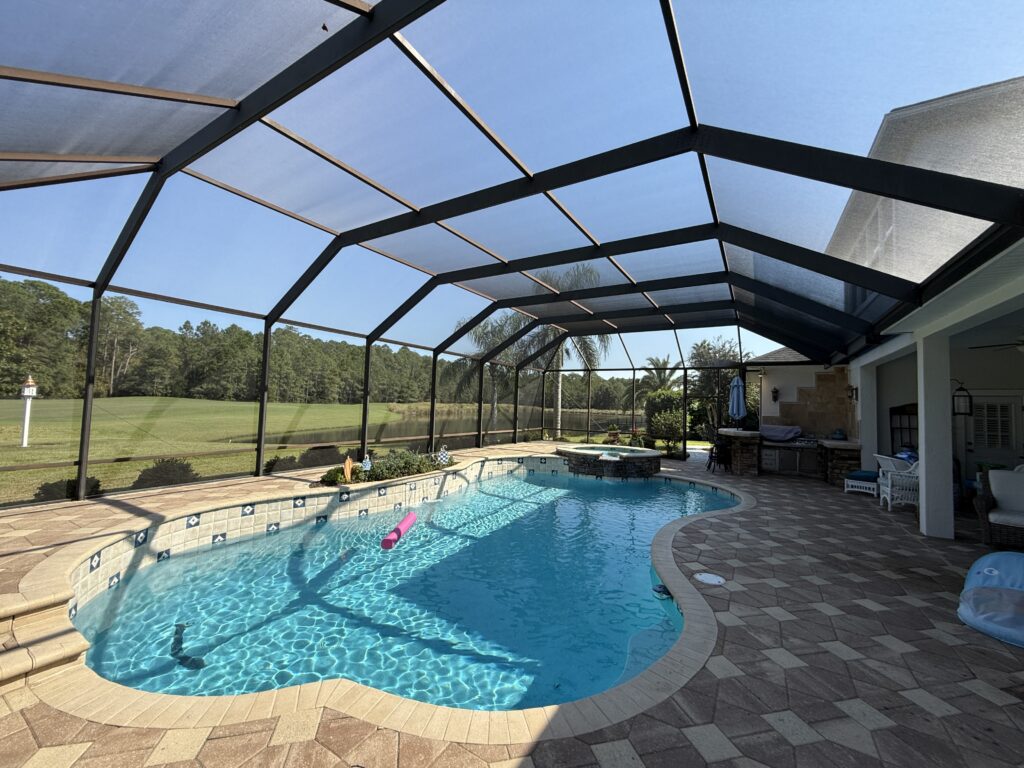
How Long Do Pool Screens Last in Florida?
If you own a home with a screened pool enclosure in Florida, eventually you may notice the screening beginning to fade, sag, loosen, or tear. That naturally raises an important question: How long do pool screens last in Florida?
There isn’t one exact lifespan for every pool screen. The useful life of screening depends on the type and quality of screen material, sun exposure, weather, nearby trees, pets, maintenance, and the conditions surrounding the enclosure.
Florida’s climate can be particularly demanding on pool screens. Strong sunlight, heat, humidity, heavy rain, wind, tropical weather, falling branches, and everyday wear can gradually weaken screen material.
Some pool enclosures may need only occasional individual panel repairs for years, while others eventually reach the point where replacing screen panels one at a time no longer makes sense.
Understanding what causes pool screens to deteriorate—and recognizing the signs that your screening is approaching the end of its useful life—can help you decide whether you need a simple repair or complete pool cage rescreening.
What Is the Typical Lifespan of a Pool Screen in Florida?
As a general rule, many standard pool screens may provide roughly 7 to 12 years of service, while some higher-quality or heavier-duty screen materials may last longer under favorable conditions.
However, these numbers should be treated as general estimates rather than guarantees.
Two homes in the same Jacksonville neighborhood can experience very different screen life. One enclosure may be heavily shaded and protected from wind, while another receives direct Florida sunlight for most of the day and is surrounded by trees.
Factors such as screen material, installation, weather exposure, pets, maintenance, and storm damage can all affect how long a pool enclosure screen remains serviceable.
Rather than replacing screening simply because it reaches a certain age, homeowners should pay attention to its actual condition.
If the material remains flexible, secure, and relatively free of damage, replacement may not be necessary. If it has become brittle, faded, loose, or repeatedly tears in different areas, the screening may be approaching the end of its useful life.
Why Florida Weather Is Hard on Pool Screens
Pool screens in Florida remain outdoors 24 hours a day, 365 days a year. That means they are continuously exposed to environmental conditions that can gradually weaken the material.
Florida Sun and UV Exposure
Strong sunlight is one of the biggest factors affecting outdoor screening.
Over years of exposure, ultraviolet radiation can contribute to deterioration of screen fibers. Material that was once flexible may gradually become dry or brittle.
This is why an older screen sometimes tears relatively easily even when there was no obvious impact.
Heat and Humidity
Jacksonville’s long periods of heat and humidity create another environmental challenge.
While screen materials are designed for outdoor use, years of exposure to Florida conditions can contribute to normal aging and deterioration.
Wind and Storms
Strong winds place additional stress on large screened surfaces.
A screen enclosure contains many individual panels, and wind pressure can affect loose, weakened, or aging material. Tropical storms and hurricanes can create even greater stress and may cause immediate damage from wind or flying debris.
Trees and Falling Debris
Trees provide welcome shade around a Jacksonville home, but branches, pine needles, palm debris, and other falling material can damage enclosure screens.
Even a small branch hitting an older screen may create a tear that spreads over time.
Pets and Wildlife
Dogs, cats, squirrels, birds, and other animals can damage screen material.
Pet-related damage is especially common near lower panels and screen doors where animals may push against, scratch, or climb the screening.
8 Signs Your Pool Screens May Need Replacement
Pool screens do not need to be replaced simply because they are old. Their condition is usually more important than their age.
Watch for these common signs.
1. The Screen Has Become Brittle
Healthy screen material should retain some flexibility. If the mesh feels dry or brittle and tears easily, deterioration may be widespread.
2. Multiple Panels Are Tearing
One damaged panel does not necessarily indicate a problem with the entire enclosure.
However, if new tears keep appearing in different areas, the screening may be reaching the end of its useful life.
3. Screens Are Sagging
Screen panels should normally appear relatively tight and uniform. Loose or sagging sections can indicate aging material, installation issues, or deterioration.
4. Screen Is Pulling Away From the Frame
Look around the perimeter of individual panels. If the screening is separating or openings are developing around the edges, repairs may be necessary.
5. The Screening Is Noticeably Faded
Fading by itself does not always mean replacement is necessary, but widespread discoloration combined with brittleness, sagging, or tearing can indicate aging screen material.
6. You Are Finding More Insects Inside the Pool Area
Mosquitoes, flies, and other insects appearing inside a screened enclosure may indicate small tears or openings that are not immediately obvious.
7. Repairs Are Becoming Frequent
Replacing one damaged panel occasionally is normal.
Replacing another panel every few months may indicate a larger problem.
When repairs become frequent throughout an older enclosure, it may be worth comparing the continued cost and inconvenience of individual repairs with complete rescreening.
8. The Enclosure Has Mismatched Screen Panels
Over many years, individual repairs may leave an enclosure with panels of different ages, shades, and condition.
Complete rescreening can create a cleaner and more uniform appearance.
Pool Screen Repair vs. Complete Rescreening
One of the most important decisions is whether to replace individual damaged panels or rescreen the entire pool enclosure.
The answer depends primarily on the condition of the remaining screening.
Individual Pool Screen Repair May Be Better When:
Only one or several panels are damaged
Most of the existing screen remains in good condition
The screen material is still flexible
Damage resulted from an isolated event
Surrounding panels are secure
The enclosure does not have widespread fading or deterioration
In these situations, replacing only the damaged screen panels may be the practical choice.
Complete Pool Cage Rescreening May Be Better When:
Multiple panels are torn or damaged
Screen material has become brittle
Panels are sagging throughout the enclosure
Screens are separating from the frame in multiple areas
New tears continue appearing
Individual repairs are becoming frequent
The enclosure contains many mismatched replacement panels
Most of the screen material is showing similar signs of age
Complete rescreening replaces aging screen material throughout the enclosure rather than continuing to repair individual sections as they fail.
The right choice isn’t automatically the most extensive one. The condition of the enclosure should determine the appropriate solution.
Can You Make Pool Screens Last Longer?
Although outdoor screening will eventually wear, homeowners can take a few steps that may help prevent unnecessary damage.
Inspect the Enclosure Regularly
Walk around the pool enclosure periodically and look for small tears, loose edges, sagging panels, and openings around doors and frames.
Finding a small problem early may prevent it from becoming larger.
Check the Pool Cage After Storms
Strong winds and falling debris can damage screening. After severe weather, inspect the enclosure even if there is no obvious damage from inside the pool area.
Keep Tree Branches Away From the Enclosure
Branches rubbing against screening can cause unnecessary wear. Keeping nearby vegetation reasonably maintained may reduce contact with screen panels.
Address Small Tears
A small opening can become larger when exposed to wind and continued tension.
If the surrounding screen remains in good condition, replacing the damaged panel may prevent the problem from spreading.
Watch for Pet Damage
If pets regularly use the screened area, pay particular attention to lower panels and screen doors.
Does Screen Material Affect How Long Pool Screens Last?
Yes. Different screen materials can have different characteristics relating to durability, visibility, airflow, insect protection, and resistance to pets or other damage.
The appropriate screen depends on the enclosure and homeowner’s priorities.
Factors to consider include:
Desired visibility
Airflow
Insect protection
Pets
Exposure to trees
Sun exposure
Location of the enclosure
Desired appearance
Budget
When having a pool cage repaired or rescreened, ask about the screen materials available for your particular project rather than assuming every type of screen performs the same way.
How Jacksonville’s Climate Affects Pool Enclosures
Jacksonville homeowners experience a combination of strong sunlight, heat, humidity, heavy rain, seasonal storms, and periods of high wind.
Properties in different parts of the Jacksonville area may experience different conditions as well.
Homes near Jacksonville Beach, Atlantic Beach, and Neptune Beach may have greater exposure to coastal winds and salt air. Properties in Mandarin, Julington Creek, Arlington, Southside, and other heavily wooded areas may experience more falling leaves, pine needles, branches, and tree debris.
These differences are one reason there isn’t a universal replacement schedule for every pool screen in Northeast Florida.
Regular inspection is generally more useful than relying on age alone.
Should You Replace Pool Screens Before Hurricane Season?
You do not necessarily need to replace otherwise healthy screening simply because hurricane season is approaching.
However, hurricane season provides a good reason to inspect the condition of your pool enclosure.
Look for:
Loose panels
Existing tears
Screens pulling away from the frame
Sagging material
Damaged screen doors
Branches hanging over the enclosure
Obviously brittle or deteriorated screening
If you find existing damage, having the enclosure evaluated before severe weather arrives may help identify repairs that should be addressed.
No screen enclosure should be described as hurricane-proof simply because it has new screening. Severe storms can damage even properly maintained outdoor structures.
Is It Worth Rescreening an Older Pool Cage?
If the enclosure structure remains suitable and the primary problem is aging screen material, rescreening may significantly improve the appearance and usability of the pool area.
New screening can help:
Reduce mosquitoes and other insects
Limit leaves and windblown debris
Restore a cleaner appearance
Eliminate numerous torn or sagging panels
Create more consistent screening throughout the enclosure
Reduce the need to continually replace individual aging panels
Whether complete rescreening makes sense depends on the condition of the screen material and the enclosure itself.
If damage extends beyond the screen material, broader screen enclosure repair or restoration may need to be considered.
Frequently Asked Questions
How often should pool screens be replaced in Florida?
There is no required replacement schedule. Many standard screens may last roughly 7 to 12 years, while some materials can last longer. Actual lifespan depends on screen type, sun exposure, weather, maintenance, pets, trees, and other conditions.
Can I replace only one pool screen panel?
Yes. When damage is isolated and the surrounding screening remains in good condition, replacing an individual panel may be appropriate.
How do I know when my entire pool cage needs rescreening?
Consider complete rescreening when multiple panels are failing, screening has become brittle or sagging, tears repeatedly develop in different areas, or individual repairs are becoming frequent.
Why does my pool screen keep tearing?
Repeated tearing may be caused by aging or brittle screen material, wind, branches, pets, wildlife, improper tension, or other environmental factors.
Does Florida sun damage pool screens?
Long-term exposure to sunlight and UV radiation can contribute to deterioration of outdoor screen material.
Can damaged pool screens let mosquitoes into the enclosure?
Yes. Small tears, openings around panel edges, and damaged screening can provide entry points for mosquitoes and other insects.
Is pool screen repair cheaper than complete rescreening?
Repairing a limited number of damaged panels will generally involve less work than rescreening an entire enclosure. However, when many older panels continually require replacement, homeowners may want to compare repeated repairs with the cost of complete rescreening.
Should I repair my pool screen immediately after a storm?
Inspect the enclosure after significant storms. Torn, loose, missing, or damaged panels should be evaluated, particularly if openings are allowing insects or debris into the pool area.
Pool Screen Repair and Rescreening in Jacksonville, FL
The age of your pool screening is only part of the equation. Its condition is ultimately what matters.
One torn panel in an otherwise healthy enclosure may require nothing more than individual screen replacement. Multiple brittle, sagging, faded, or repeatedly failing panels may indicate that complete rescreening deserves consideration.
Jacksonville Screen Pros provides pool screen repair, individual panel replacement, pool cage rescreening, and screen enclosure services throughout Jacksonville and nearby Northeast Florida communities.
If you’re unsure whether your pool enclosure needs a few repairs or complete rescreening, contact Jacksonville Screen Pros to discuss the condition of your screening and request a free estimate.
Call 904-299-1536
Request a Free Pool Screen Estimate